What Happens When We Make Things Together
At a table with a little yarn, a few scraps of paper, and room to pull up a chair, people who rarely know what to say to each other can find plenty to do together.
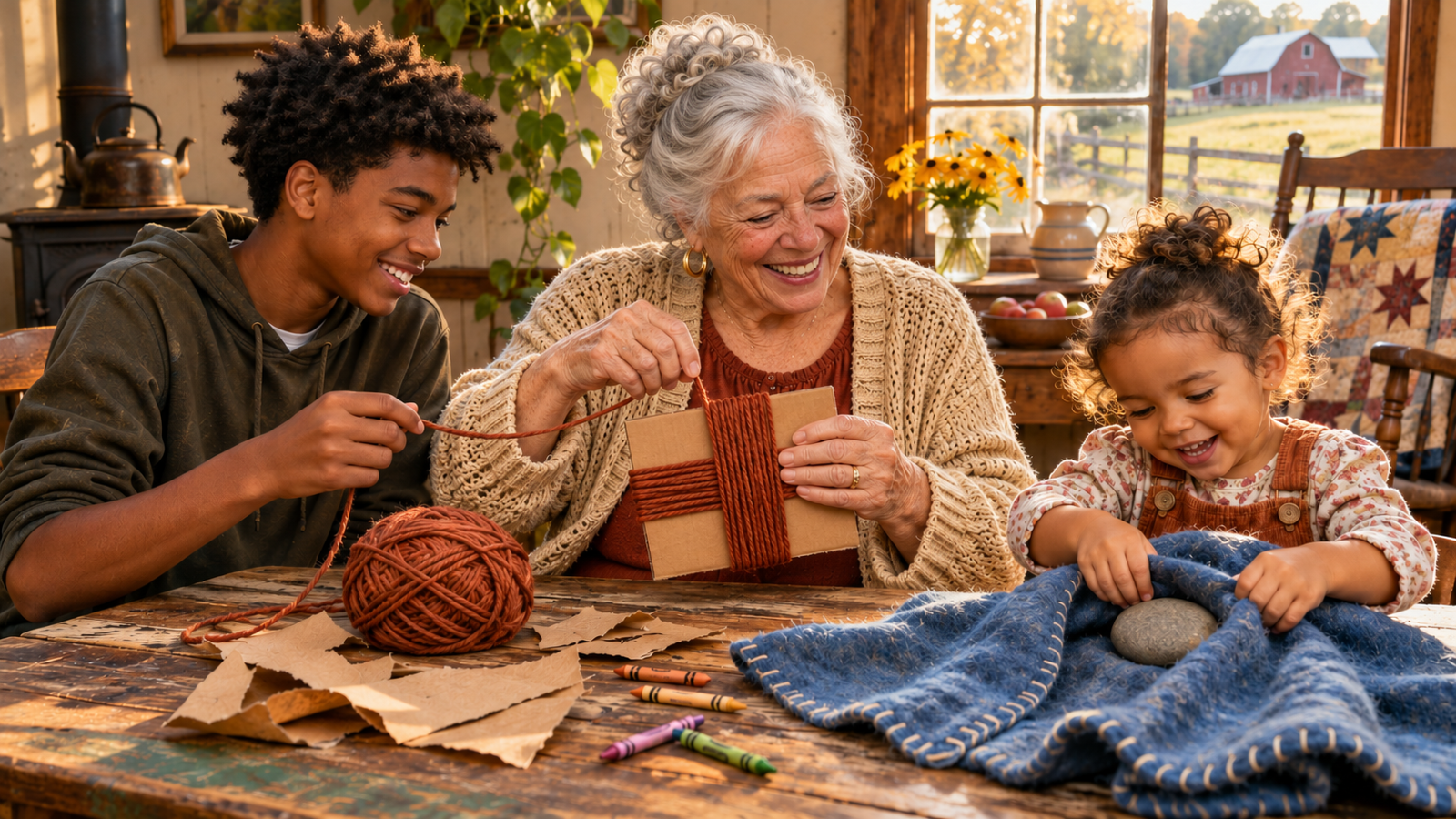
A grandmother is winding yarn around a piece of cardboard. A teenager has been at the table for ten minutes, mostly picking at the corner of a paper label. A toddler has found a smooth stone and is wrapping it in scraps of fabric, announcing to anyone who will listen that it’s going to bed.
“Can you hold this for me?” the grandmother asks.
The teenager puts down the label. “Like this?”
A few minutes later, the teenager is showing her a quicker way to wind the yarn, using two fingers to keep the strands apart. The toddler wants a blanket for the stone. The teenager slides over a square of blue felt.
That’s how it happens sometimes. Three people who might struggle to find a conversation everyone can follow can understand one another perfectly for a little while. Hold this end. I like that blue. Here, you can have some of mine.
The conversation that happens while your hands are busy
If you’ve ever asked a teenager how their day went and received a single syllable in response, try leaving a pile of cardboard and some good markers on the table. Sit down and start making something yourself.
You may spend the whole time drawing crooked houses in companionable silence. You may hear about a friend or a worry halfway through coloring a roof. Either way, you’ve spent some time together without putting anybody on the spot.
Making side-by-side gives people room to join a conversation in their own time. You can look down at your hands while you think. You can finish tying a knot before you answer. And some days a person who has very little to say will still spend twenty minutes helping you untangle a particularly stubborn ball of yarn.
There’s more than one way to show somebody how
Watch someone try to teach a stitch when the two of you use different words for almost everything. They make a loop. You make one, too. Yours slips loose. They slow down and show you where their thumb was. On the third try, it holds. You both grin.
The stitch might come with a story. Maybe it’s how their aunt finished the edges of a blanket, or how they learned to repair a sleeve when they were young. Ask about it if they feel like telling you. Show them something you learned from someone else. The pleasure is in finding out how much each person brings to the table.
And sometimes the person with the most to teach you is four years old. You were about to throw away the paper you’d cut a hole in. They held it up to the light and saw a window.
Leave something out where people can reach it
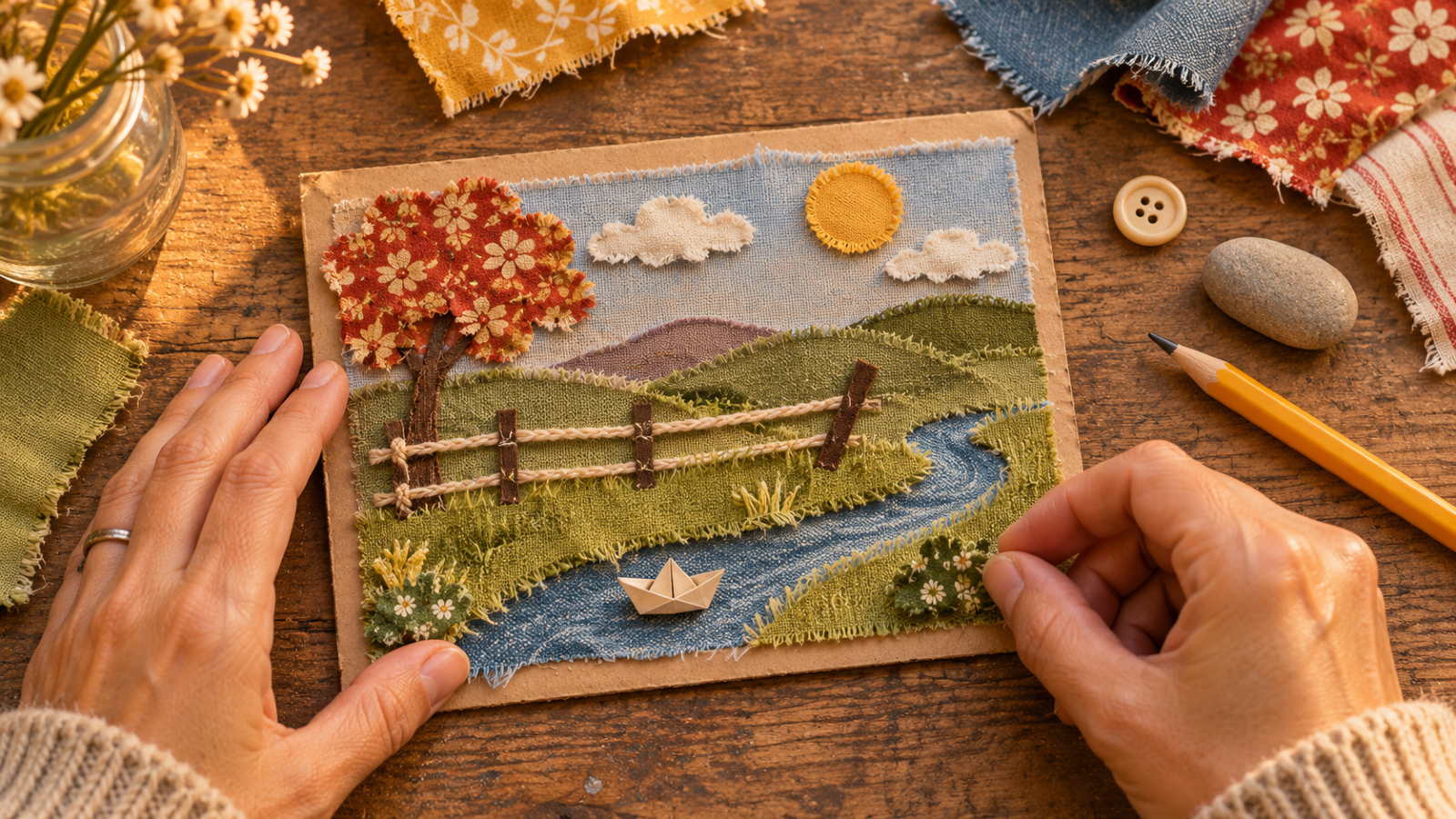
The next time people come over, put a few ordinary items in the middle of the table. Try paper cut from a grocery bag, pieces of yarn short enough to have escaped every other project, and a handful of crayons. Give everyone the same invitation: Make a place where something very small could live.
Someone will draw a house. Someone will make a nest. Somebody will decide the tiny creature lives in a boat, and now you’ll need a river running across the table. Let each person decide what to add. Before you clear up, give everyone a moment to show a detail they especially like.
Years from now, you may have no idea where those little paper houses went. You might still remember the teenager reaching for another sheet and asking, “Can mine go next to yours?”